Posts under ‘Open for Change’

The epiphany of “open” and IATI

The IATI standard is meant to make it easier to exchange and compare information about activities and funding flows in development aid worldwide. But it can be useful within a (network of) organisations as well, even if you don’t feel ready to share that data with the rest of the world (yet).

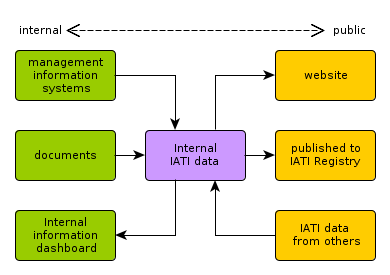
Large organisations are starting to see the benefits: adapt your internal project management system so that it contains the necessary information in the right format, then export it to IATI data from there. IATI is vendor-neutral data store

You then have an internal, vendor-independent format for your data, and have a choice of tools to put that data to use.

Cordaid project pageEarlier this year, Cordaid released a new website with information on many projects, allowing their supporters, donors and partners to see in far more detail what they are working on, what they hope to achieve, and how projects are progressing.

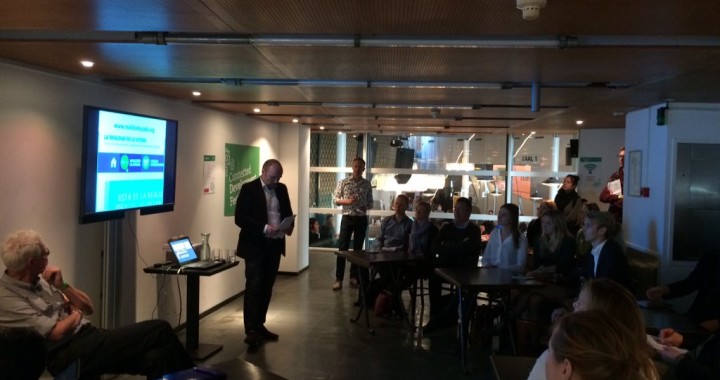
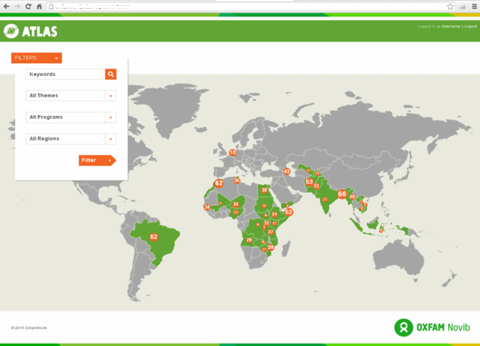
And last week, Oxfam Novib in the Netherlands hosted an “Open for Change open tea” and offered a sneak peek at their internal project browser. It should soon give their staff in offices around the world a better insight into what their organisation is doing in each country.

Oxfam Novib project browser previewSince it is fed with IATI data, it’s easy to also add the IATI data published by Oxfam GB. Thus, IATI becomes a format to combine all information of all Oxfam organisations across the whole network. And put it to multiple uses. Competing with single-use internal reporting standards.

“It’s the culture, stupid”

In both cases, once a few technical hurdles are overcome, the real challenge arises: organisational culture. Field staff realise that any information they enter into the system, becomes available to lots of people, sometimes almost real-time.

This epihany of what “open” is can lead to anxiety, often in the management of organisations. “Going open” also leads to a greater sense of ownership and responsibility with the people entering the data.

Instead of a black box with a communications department and sign-off procedures that mysteriously “translate” your story into something different, you get a channel to communicate directly, instantly. It’s actually what you can show your colleagues and friends: share what you’re doing.

It’s what many staff members already do with other parts of their lives, on social media like Twitter and Facebook.

“It’s deja vu all over again”

Many of the discussions around open data resemble the discussions back in the ’90s, when email got introduced in organisations. “You mean someone in our organisation could just send a text to anyone outside, without going through communications? Even if it’s a journalist or a member of the public, not a co-worker?”

Again, it was what many staff members already were doing from home: exchanging messages and exploring web forums.

Anyone who still thinks giving an employee an email addresses is a bad idea? Can you actually imagine that was a real management discussion, 15 years ago?

“You only see it when you get it”

The question is not whether “open” is going to happen, the question is how your staff prepares for it, makes use of it, and is aware of its opportunities as well as its risks. Benefit from the experiences they have with “open”, to shape how to get from sharing pictures of kids, cats and hobbies to sharing your organisation’s projects, activities and results. Make your project data available internally, show how it works with a few projects, let staff improve the data, and then publish the raw data.

flattr this!

A sea change in international development

A few years ago, I could not have imagined myself ever considering the World Bank a shining light on what needs to happen in international development. But today’s TED talk by Sanjay Pradhan, vice president of the World Bank Institute, is such a shining example.

We come to this crossroads from very different directions, but in choosing where to go next, I find myself more and more in the company of organisations I never thought would go “my way”, while some of the more radically progressive friends from the past are hesitating.

Do they still want to be the antagonist? Am I changing? With other progressive friends going the same way, keeping a close eye on our core principles and values, it feels like the former. And it really looks like some big ships are taking sharp turns into “our” direction.

flattr this!

Open Knowledge Festival

A few weeks ago, in September, the Open Knowledge Festival brought together a world-wide community of people working on all sorts of “open”: open cities, open design, open government, open science, open hardware, open education, … and of course: open development.

As one of the main topic streams, the open development track was packed with presentations, discussions, panels, workshops and a hackathon.

Tim Davies compiled a good overview of videos, blog posts and presentations on the open-development blog of the Open Knowledge Foundation.

Here’s a short summary by various key voices:

(This is a copy of an article published on rolf's blog)

flattr this!

New publication: business intelligence in the aid sector

Announing a new publication: “An Information Platform for Business Intelligence in the Aid Sector based on Open Data and Documents; Integrated Access to structured and unstructured data using the document-oriented database CouchDB”, by Michiel Kuijper.

Earlier this year, I was approached by Michiel Kuijper, who was working on his Bachelor degree at the Amsterdam University of Applied Sciences, and was looking for a project to combine Business Intelligence and text mining. Together, we started exploring how to apply this in the development aid sector.

In development aid, more and more information on aid activities is becoming available as structured data published according to the IATI standard. At the same time, a lot of mostly unstructured information is available in documents. We wanted to bring these two together.

  • From a business case perspective: how can a “business intelligence” approach help in data processing and analysis, based on performance indicators.
  • From a technical perspective: how can we deal with the large variety and volume of the data and documents.
  • From an information perspective: how can we combine a variety of structured and unstructured information for various purposes.

Michiel has put all of this together in a proof of concept “platform for business intelligence” based on CouchDB, using OpenCalais to annotate documents and with a front-end based on Exhibit and Simile.

The current demo version only has a data set of the Dutch Ministry of Foreign Affairs and the documents they provided at the Open Data for Development Camp in 2011. It uses facets to provide a structured way to find activities, transactions and documents, and uses a variety of widgets to present the results.

Some of the take-aways:

  • The variation in quality of available IATI data is making it hard to quickly import a lot of sources. Other related projects such as Open Spending and OIPA solve this in different ways.
  • CouchDB eliminates the need for a lot of up-front data modelling, and enables quick prototyping.
  • CouchDB also allows server-side computation of aggregation levels of data, so that client-side applications can consume this without processing.
  • Current discussions about defining APIs for IATI data can benefit from a Business Intelligence-based “pull approach” in addition to the data driven “push approach”.
  • Using the replication features of CouchDB could also help build a distributed infrastructure for data and applications, including offline access.

We’re still tidying up the code for publication, and are working on building out the platform with more data, more documents, and other interfaces. In the meantime, you can download the end report by Michiel, and look at the demo site. His thesis defense presentation is available in Dutch.

Looking forward to discussing this project and others at the upcoming Open Knowledge Festival and beyond!

(This is a copy of an article published on Open for Change)

flattr this!

Newsletter February 2012

In this newsletter:

  • a wrap-up of the past Open Tea and announcement of the next one.
  • an update on international aid data networking
  • current developments on the IATI NGO working group

Open Tea

On December the 8th the Open for Change network had its first Open Tea at the Amlab in Amterdam, to look back at the past year and discuss where we will be heading in 2012.

Mark Tiele Westra from Akvo presented openaid.nl, an initiative that makes open data on Dutch development aid visualized and searchable.
Marijn  Rijken from TNO informed  and invited us to participate on a research project on the effects of open data for the development sector.

We discussed the organization of the Open for Change network. Evident in the discussion was the important role the Open for Change network holds in connecting, exchanging and supporting open data initiatives and knowledge in the development sector. How this role should be filled in is something we are working on in 2012.

We want to thank the 1%CLUB, Akvo and TextToChange for hosting the open tea in the gorgeous Amlab, and hope to see you there again at the next Open Tea: March 8th, 15:00- 17:00 and after that Open drinks!

International networking

At various meet-ups at conferences in 2011, we discussed ways to strengthen the international network of open aid data activists.

In November, we submitted a proposal for a European Aid Data Network to the EuropeAid budget line of the European Commission, led by AidInfo in the UK, with Partos (NL), FORS (CZ), ACEP (PT), IGO (PL) and the Open Knowledge Foundation (UK). We hope to hear by early March whether we are invited to submit a full proposal.

In the meantime, AidInfo has asked Claudia Schwegmann of OpenAid.de to continue building out this emerging European network. We had a first conference call last Tuesday, and plan to have the next one on March 2nd.

To create joint channels of communication, we invite you all to:

  1. Join the open-development mailing list to discuss international open aid data: http://lists.okfn.org/mailman/listinfo/open-development
  2. Track our guide of open aid data-related events, and submit yours: http://lanyrd.com/guides/open-aid-data/

IATI and NGOs

The IATI NGO Working Group is a CSO-led forum that was created with the approval of the IATI Steering Committee to discuss the application of the IATI Standards to the work of CSOs and to present practical proposals on CSO-specific approaches to publication of IATI compatible data.

The CSO Working Group is co-chaired by Beris Gwynne, representing the International NGO Charter of Accountability Company, and Brian Tomlinson, representing the CSO Open Forum.

Both Partos and Open for Change are represented in the group, and we’re aiming to organise an “intervision meeting” for Dutch NGOs in March.

The next peer reference meeting is planned for beginning of March. The first general consultation will hopefully take place in April 2012. Read more on our blog!

Recommended reading

Got news?

If you want to bring in subjects or interesting news for next newsletter, you are more than welcome: send your contributions to info@openforchange.info

(This is a copy of an article published on rolf's blog)

flattr this!